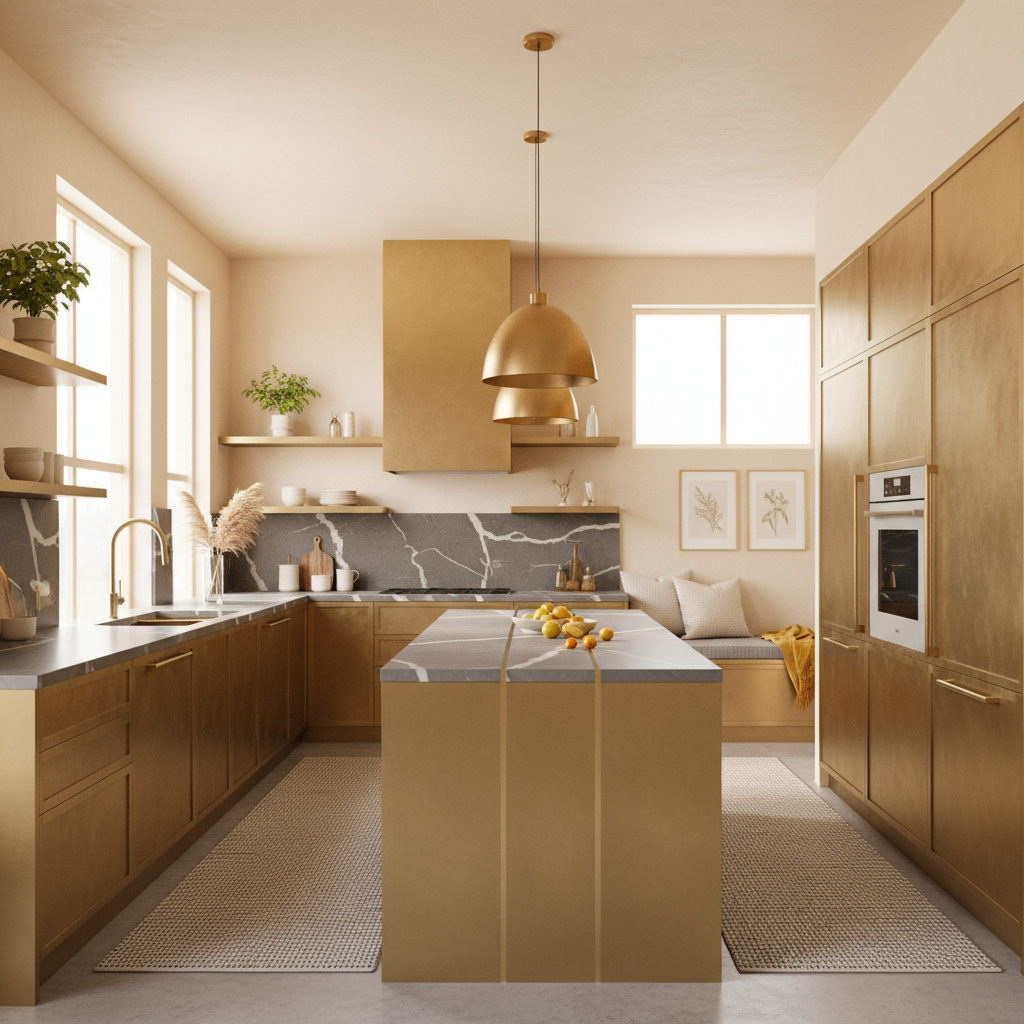
Lately, so many of my clients are asking for the same thing: a kitchen that feels calm, clean, and connected to nature, but not cold or sterile.
They want that perfect blend of minimalist design and cozy warmth. That’s the magic of Japandi kitchen design ideas that demonstrate this style.
This beautiful fusion of Japanese simplicity and Scandinavian functionality is all about creating a space that feels both tranquil and incredibly practical.
It’s less about trends and more about crafting a kitchen with a timeless, soulful quality.
1) Light Oak Handleless Kitchen Cabinets
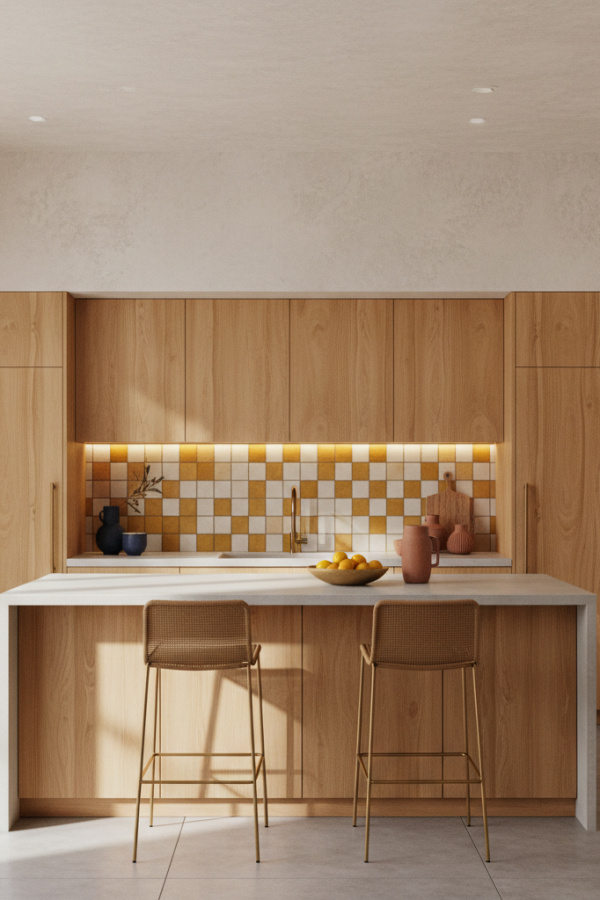
Light oak is the hero of Japandi kitchen design for a reason. Its warm, natural tones create such an inviting atmosphere while keeping the overall aesthetic clean and minimal.
I love the choice of handleless doors for this look. The uninterrupted flow of the beautiful wood grain creates a seamless, uncluttered facade that feels incredibly serene.
This isn’t about stark emptiness. It’s about creating a space where every element feels intentional and contributes to a sense of calm.
This look is all about quiet confidence.
Hidden storage is your best friend here. Think pull-out pantries and clever corner organizers to keep your essentials handy but out of sight.
It’s so beautifully simple.
Pair the light oak with crisp white walls. To nail the look, this combination will amplify the natural light and let the wood’s beauty take center stage.
2) Matte White Kitchen Island with a Natural Wood Countertop
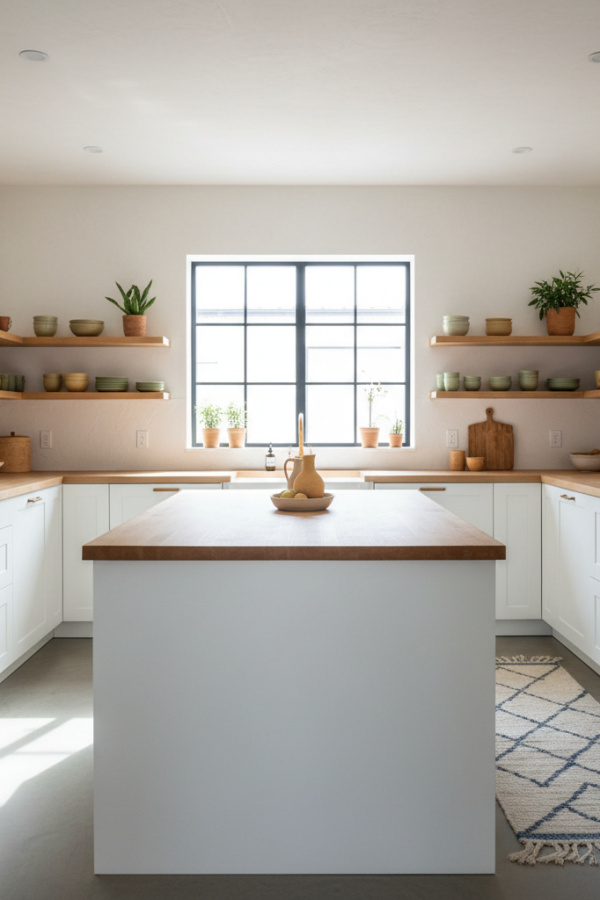
A central island is the functional heart of a Japandi kitchen. Using matte white cabinetry for the base provides a crisp, clean backdrop that enhances the serene mood.
I find that topping it with a natural wood countertop is the perfect move. The warmth and texture of the wood create a beautiful, organic contrast against the stark white.
This is a classic Japandi pairing. It’s all about that harmonious blend of cool minimalism and natural warmth.
This combination is pure, balanced harmony.
Position your island to catch the morning light. The sunlit atmosphere highlights the beauty of the materials and makes the kitchen feel so inviting.
It just feels right.
Hang a few minimalist pendant lights above the island. For a fresh twist, they provide great task lighting without adding any visual clutter to the space.
3) Open Walnut Wood Kitchen Shelving
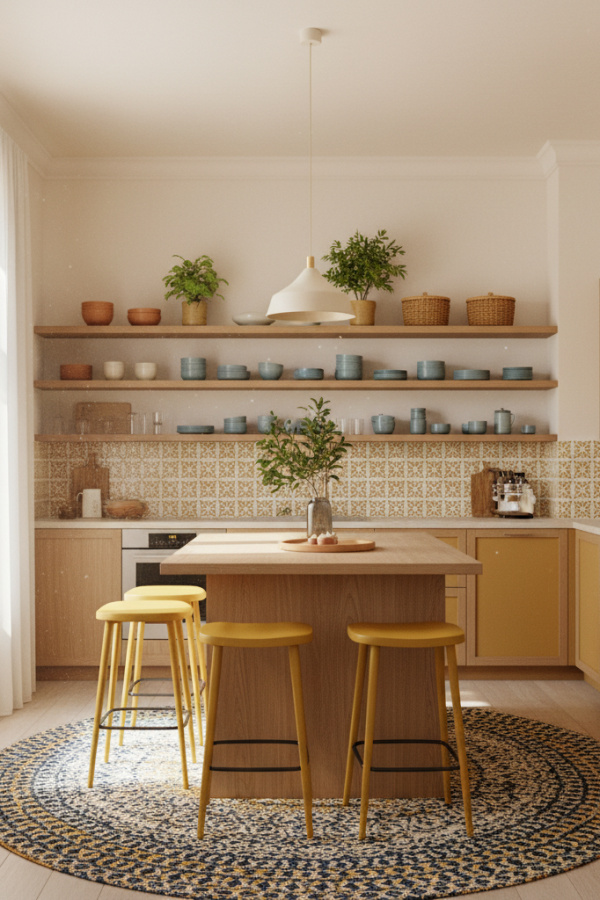
Open shelving in a Japandi kitchen isn’t for clutter. It’s a stage for displaying a few of your most beautiful, everyday items.
I’m obsessed with the rich, deep tones of walnut for this. The dark wood adds a wonderful depth and warmth that feels both grounding and luxurious.
The key here is a minimal, curated display. Choose a selection of your favorite ceramics and cutting boards that reflect your personal style.
Every item on display should earn its spot.
Balance is essential in Japandi design. You’ll love how alternating open shelves with closed cabinets creates visual interest and keeps the look clean.
It’s a very intentional look.
A few well-placed plants on the shelves will breathe life into the space. It’s a perfect way to enhance that all-important connection to nature.
4) Soft Beige Kitchen Cabinets with Black Hardware
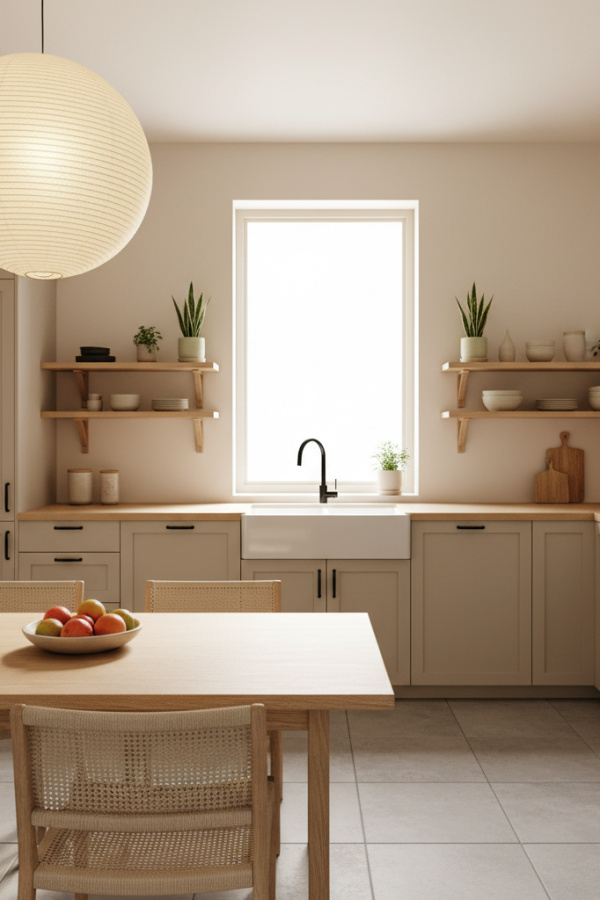
Soft beige cabinets in a matte finish are a wonderful choice for a Japandi kitchen. This warm, earthy neutral creates an inviting atmosphere while still feeling very clean and modern.
I suggest adding sharp, black hardware for contrast. The dark, graphic accents provide a beautiful definition that keeps the beige from feeling flat.
This combination feels sophisticated and incredibly functional. It’s a palette that is both calming and full of quiet character.
This is a warm and modern take on neutral.
Functionality is at the heart of this style. Incorporate clever pull-out organizers and dividers to maximize your storage efficiency.
The contrast is so sharp and clean.
A light-colored quartz or concrete countertop is a great choice here. It enhances the bright, airy feel of the room while being super durable.
5) Natural Stone Tile Backsplash
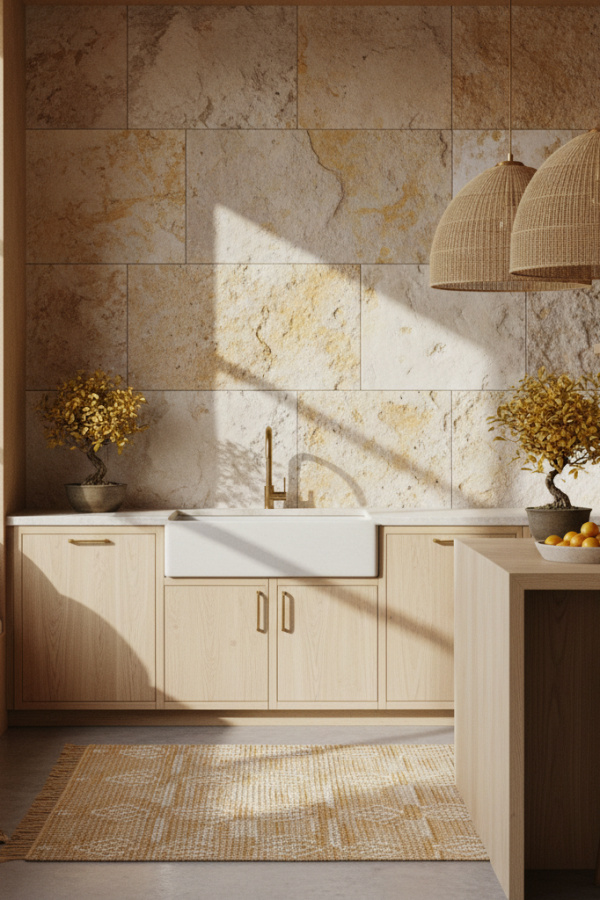
A natural stone backsplash brings an incredible amount of organic texture and character to a kitchen. It’s like installing a piece of nature’s own artwork.
I was amazed to learn how this single element can add so much soul to a minimalist space. The unique patterns in the stone ensure your kitchen is one-of-a-kind.
Light wood cabinets are the perfect complement to the stone. The combination feels effortlessly elegant and deeply connected to nature.
This is how you do minimalism with texture.
Let the sun be your best accessory. Natural light will dance across the stone and wood surfaces, highlighting their beautiful, natural variations.
It feels so earthy and authentic.
Consider extending the backsplash to the ceiling behind the range. You’ll love how this creates a striking focal point and adds a sense of height to the room.
6) Ash Wood Kitchen Island with Free Moving Seating
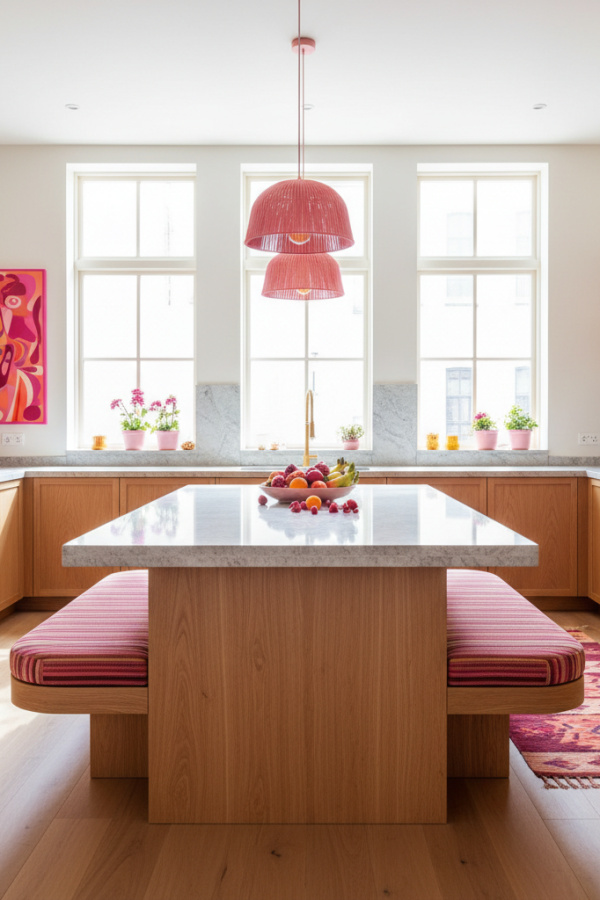
An island with free moving, integrated seating is such a smart, multifunctional solution. The ash wood base brings a light, natural warmth to the space that is so inviting.
This design transforms the island into a social hub. It’s the perfect spot for a casual breakfast or for friends to gather while you cook.
I find the vibrant simplicity of this look is all about its clean lines and uncluttered feel. The beauty is in its thoughtful functionality.
This island is designed for connection.
Ash wood is a great choice because it’s durable and has a beautiful, subtle grain. It develops a lovely character over time.
It’s a hardworking piece of furniture.
Incorporate discreet storage within the island. Here’s my favorite part: this maintains the clean look while keeping your kitchen beautifully organized.
7) Warm Gray Kitchen Cabinets with Brass Pulls
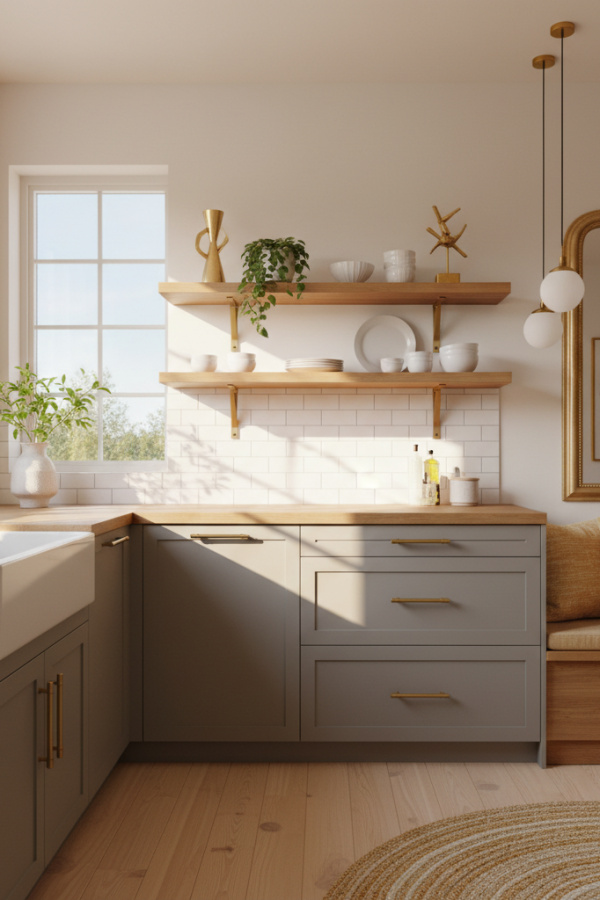
Warm gray cabinets strike a perfect balance between cozy and sophisticated. The neutral tone creates a wonderfully calming backdrop for a busy kitchen.
I’m obsessed with adding brass pulls to a color like this. The touch of warm metal brings a subtle sparkle and a layer of elegance to the space.
This combination feels both bright and incredibly refined. It’s a perfect example of how Japandi design can feel very luxurious.
This is quiet, understated luxury.
Keep the rest of the look clean and simple. Opt for handleless upper cabinets to maintain that sleek, minimalist aesthetic.
The brass is like jewelry for the cabinets.
Incorporate some natural elements like a wooden countertop. To nail the look, the balance of the warm wood against the cool gray is key to the Japandi philosophy.
8) Concrete Countertops with Light Oak Cabinets
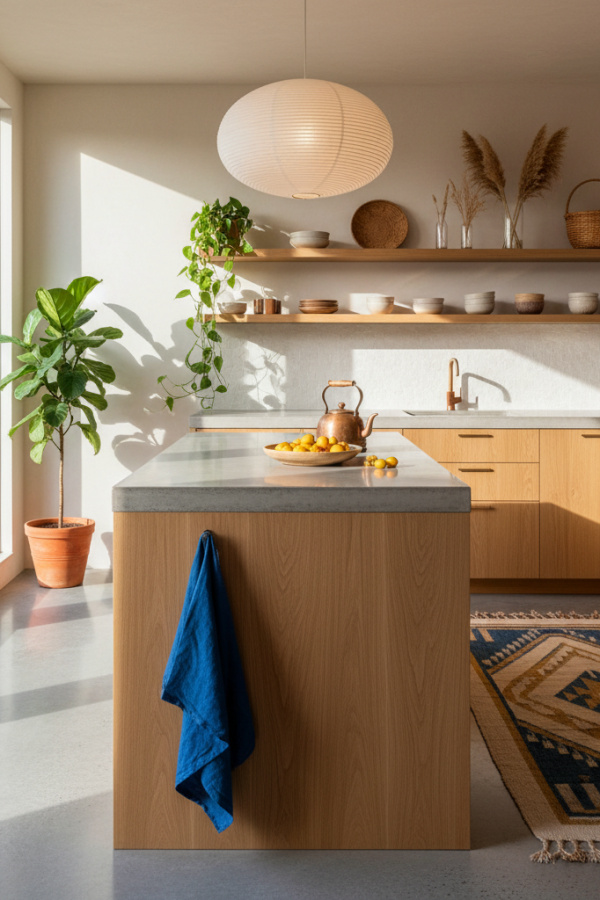
Concrete countertops bring a cool, industrial edge to a Japandi kitchen. I love the raw, tactile surface and the unique character it develops over time.
The contrast with smooth, light oak cabinets is stunning. The combination of the cool concrete and the warm wood is the perfect industrial-minimalist blend.
A sunlit space is crucial for this look. The natural light floods the kitchen and enhances the subtle textural variations in the concrete.
This is a beautifully unexpected combination of materials.
This look proves that minimalism doesn’t have to be boring. My design journey has taught me it’s all about playing with texture and contrast.
The concrete adds so much character.
Consider an integrated concrete sink for a truly seamless look. It’s a custom detail that feels incredibly high-end and intentional.
9) Natural Wood Shelves with Black Metal Brackets
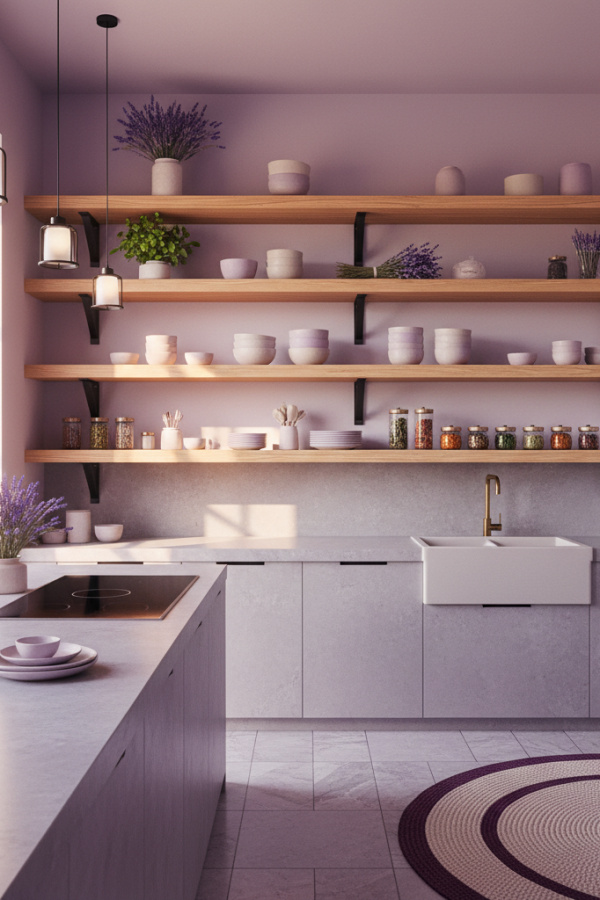
Open shelving with sharp, black metal brackets adds an industrial touch to a Japandi kitchen. The striking contrast against the natural wood shelves is so graphic and cool.
I suggest using a light wood like ash or oak for the shelves. The warmth of the wood provides a perfect balance to the strength of the metal.
The key to making open shelving work is a clutter-free approach. Display only your most essential and beautiful everyday items.
These shelves are your kitchen’s personal catwalk.
This is your chance to turn your favorite dishes into part of the decor. A curated collection looks so much better than a jumble of mugs.
It’s a perfect blend of strength and warmth.
Allow for plenty of breathing room on the shelves. For a fresh twist, the negative space is just as important as the items you choose to display.
10) Natural Birch Kitchen Cabinets with Sliding Doors
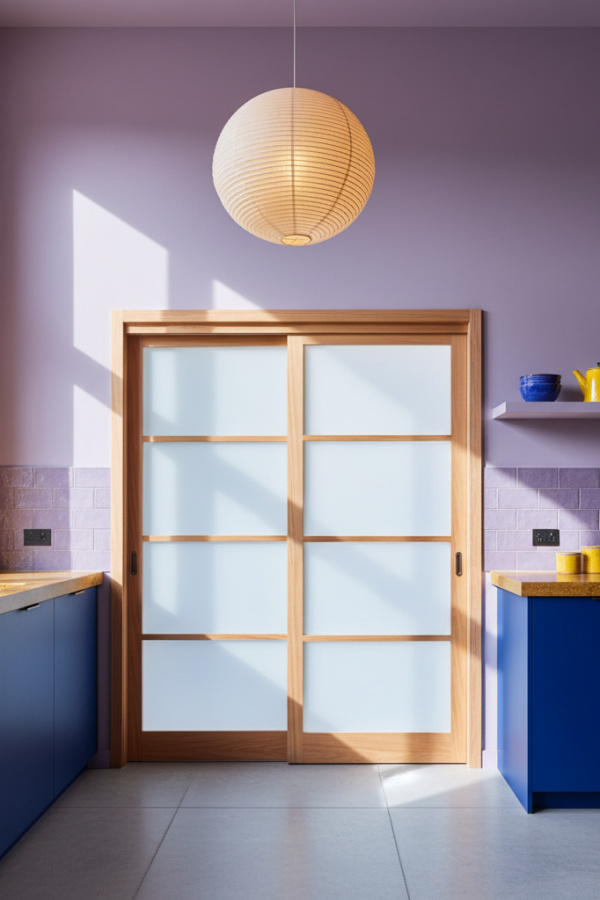
Natural birch cabinets bring a light, airy feel to a Japanese-inspired kitchen. The wood’s subtle grain adds a beautiful layer of texture.
I’m obsessed with the use of sliding doors. It’s a nod to traditional Japanese architecture and a wonderfully practical space-saving solution.
When the doors are closed, they create a seamless, uncluttered look. It’s the essence of minimalist design.
This design is so calm and clever.
The bright atmosphere is enhanced by the light wood tones. You’ll love how paper lantern-inspired lighting can add an authentic, soft glow.
It’s a quiet, thoughtful design.
Use hidden handles or push-to-open mechanisms on the sliding doors. This maintains the clean, uninterrupted lines that are so central to this style.
11) Charcoal Gray Kitchen Island with a Butcher Block Top
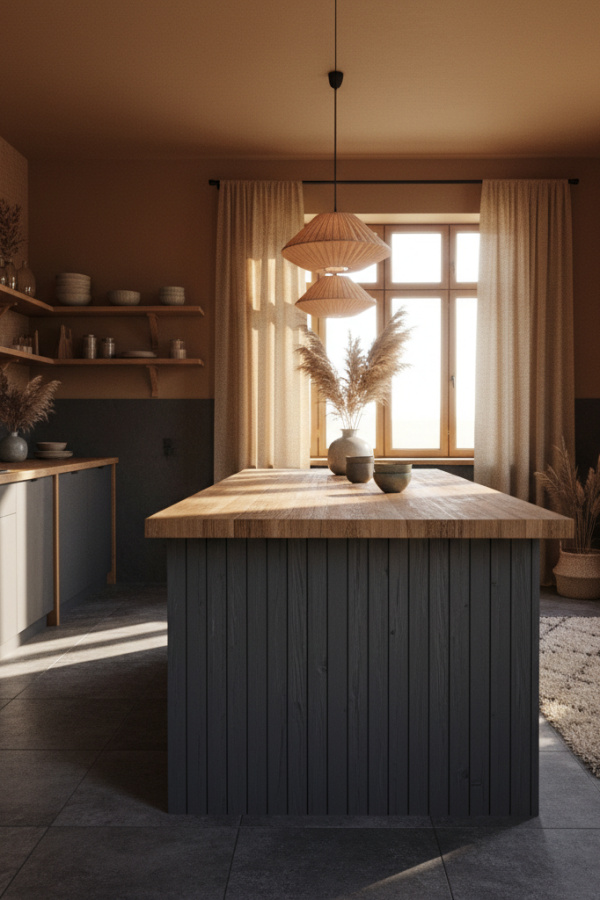
A kitchen island with a charcoal gray base adds a wonderful depth and sophistication. This moody, modern color is a perfect anchor for a warm, sunlit kitchen.
I find that a butcher block top is the ideal partner for a dark base. The natural warmth and practicality of the wood is a beautiful contrast.
This is a fantastic example of the Japandi blend of styles. It feels both a little bit rustic and incredibly refined at the same time.
The contrast of dark and warm is so inviting.
Natural light is key here. It will play off the dark gray and warm wood tones, elevating the entire space.
It feels both cozy and sophisticated.
Complement the island with sleek, handleless cabinets in a light wood finish. After seeing this in action, it’s clear this balance is key to the perfect Japandi look.
12) Walnut Kitchen Cabinets with a White Ceramic Tile Backsplash
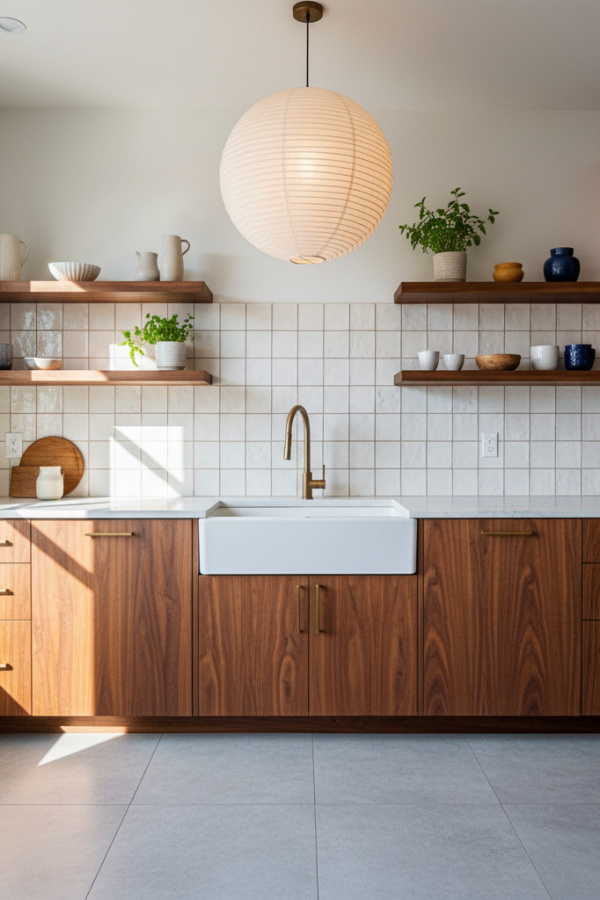
Rich, dark walnut cabinets provide a stunning contrast to a clean white ceramic tile backsplash. This combination is a hallmark of Japandi design, creating so much depth.
I enjoy how the simplicity of the white backsplash allows the beautiful, dramatic grain of the walnut to really shine. It’s a very intentional pairing.
The overall atmosphere is both vibrant and tranquil. The warm wood and the crisp white create a harmonious, inviting space.
This is a masterclass in light and dark.
Incorporate sleek, minimalist hardware on the walnut cabinets. Slim metal pulls in a matte black finish will maintain the clean, modern aesthetic.
The richness of the walnut is incredible.
Add a touch of nature with a small indoor herb garden on the countertop. You’ll love the pop of green against the rich wood and white tile.
13) Cream Matte Kitchen Cabinets with Wood Grain Accents
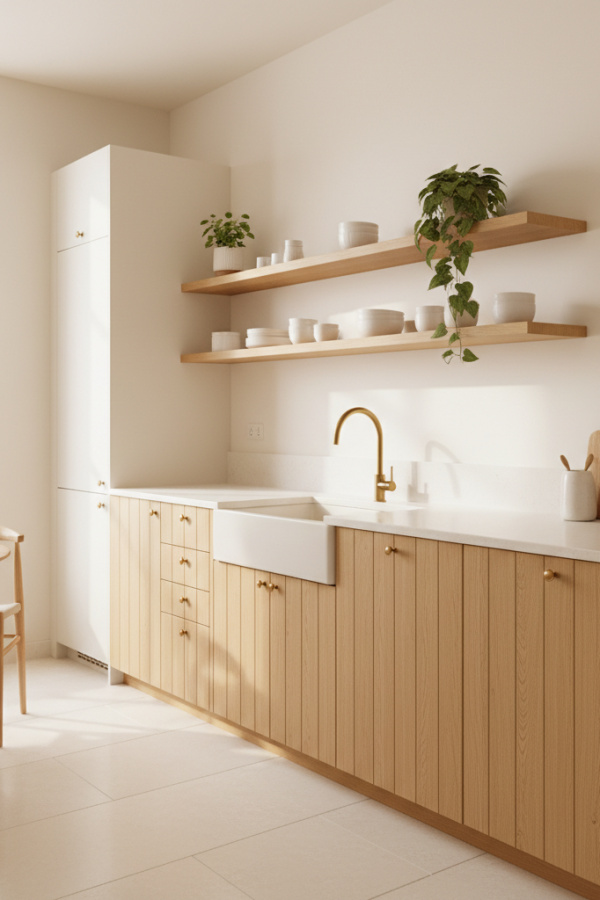
Cream matte cabinets are the perfect canvas for a bright, Scandinavian-inspired kitchen. This warm neutral creates an airy, open feel that is so welcoming.
I love the subtle detail of adding wood grain accents. It’s a nod to both Japanese and Scandinavian design traditions, celebrating natural materials.
This is a quiet, thoughtful design. It’s all about creating a space that feels calm, bright, and beautifully balanced.
The wood grain detail is a sophisticated touch.
Maximize the natural light with sheer window treatments. To nail the look, the bright atmosphere is key to that coveted Scandinavian feel.
It’s a very serene and gentle palette.
Choose cabinet hardware in brushed brass for a sophisticated touch. My design journey has taught me these finishes complement both the cream and wood tones beautifully.
14) Natural Teak Kitchen Island with a Waterfall Edge
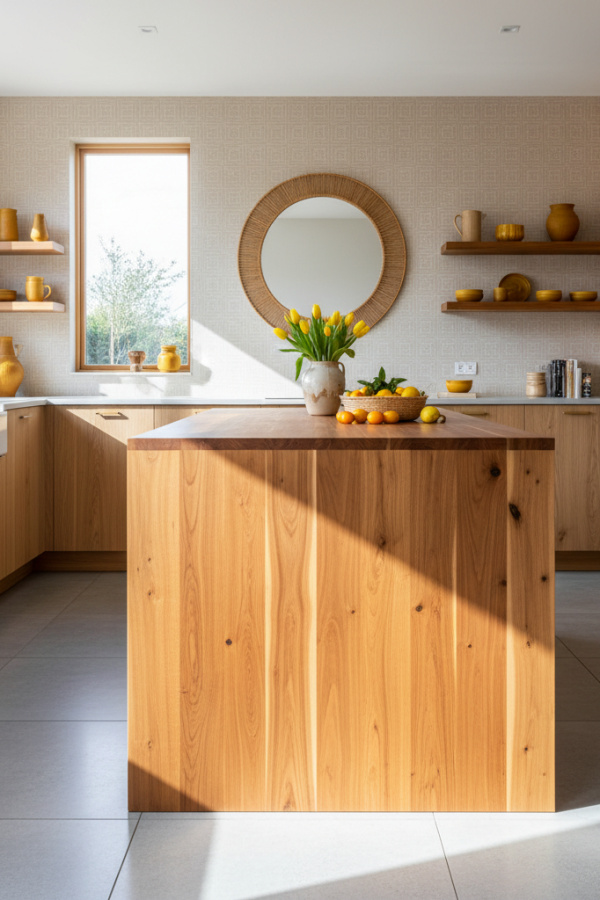
A kitchen island made from natural teak wood is a stunning, elegant focal point. The rich golden hues and distinctive grain bring so much warmth to the space.
The waterfall edge is a detail that elevates the entire design. I’m obsessed with how this sleek feature showcases the beauty of the wood.
This is a perfect centerpiece for a sunlit, refined kitchen. The interplay of the natural light and the beautiful wood is simply gorgeous.
This island is a functional piece of sculpture.
Pair the teak island with light-colored perimeter cabinetry. This is a classic Japandi move that harmonizes light and dark elements.
The teak is so warm and elegant.
Incorporate minimalist seating, like backless stools in a complementary wood tone. What I love is they provide function without competing with the island’s design.
15) Open Concept Kitchen Shelving
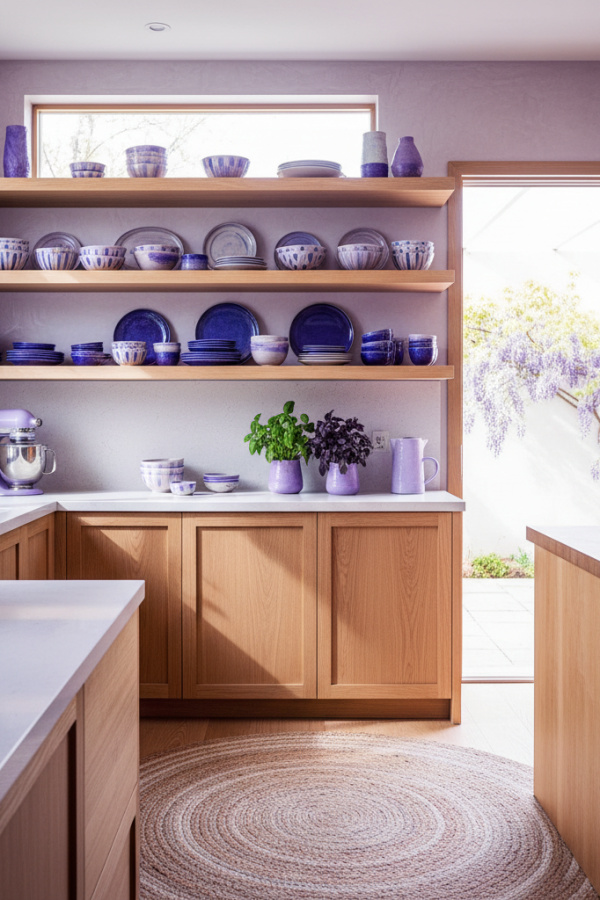
Open shelving is at the heart of Japandi design, but it’s all about thoughtful curation. These floating shelves create an airy, spacious feel in the kitchen.
I always advise my clients to display their most beautiful ceramics here. Choose pieces with simple forms and neutral colors to maintain a zen-like atmosphere.
The key is to avoid clutter at all costs. Every single item should have a purpose and feel intentionally placed.
This is how you curate calm in your kitchen.
A vibrant zen kitchen can still have a little color. A few small plants or a single colorful bowl can add life to the space.
It’s all about mindful display.
Use a mix of materials for visual interest. For a fresh twist, sleek metal brackets with warm wood shelves is a harmonious blend of industrial and natural.
16) Pale Gray Lacquer Kitchen Cabinets
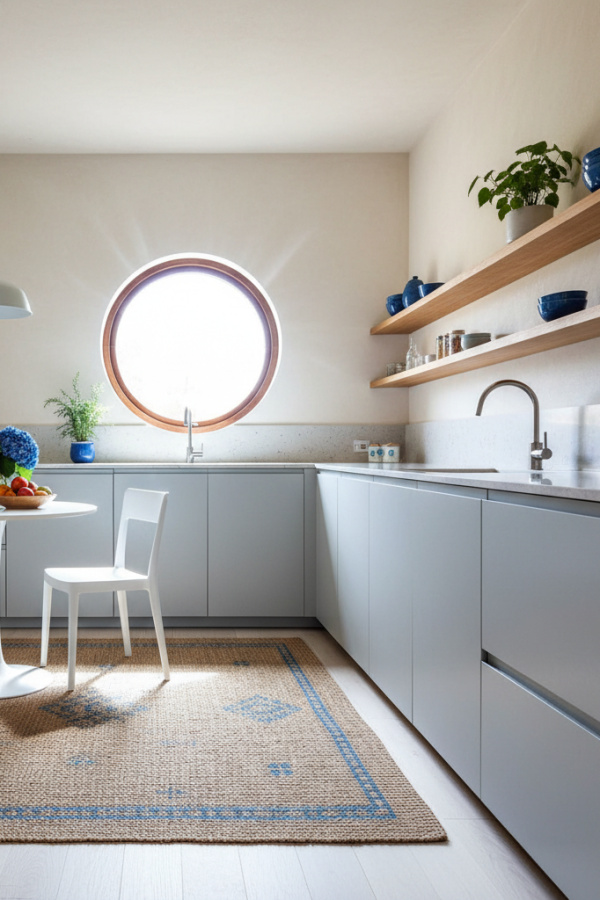
Pale gray lacquered cabinets are a beautiful fusion of Japanese minimalism and Scandinavian functionality. The soft, neutral backdrop is both calming and contemporary.
Minimalist hardware is the star of this look. I find sleek pulls or discreet edge grips are perfect for maintaining those clean, uninterrupted lines.
The high-gloss lacquer finish is fantastic for a bright kitchen. It reflects light beautifully, making the whole space feel more open and inviting.
This is a beautifully serene and sophisticated look.
Cleverly concealed storage is a must for this style. Pull-out pantry systems and built-in organizers keep your countertops completely clutter-free.
The lacquer finish is so sleek.
Strategic lighting is key. Here’s my favorite part: under-cabinet LED strips will enhance the luminosity and give the kitchen a beautiful evening glow.
17) White Quartz Countertop with a Dark Walnut Base
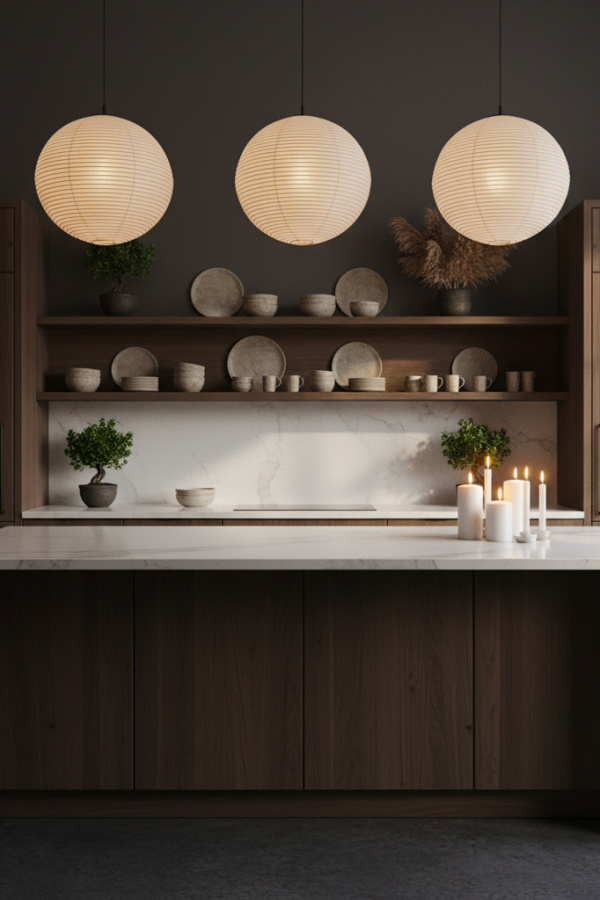
A crisp, white quartz countertop is a perfect fit for the Japandi aesthetic. It’s a pristine, low-maintenance surface that enhances the clean lines of the style.
I love the dramatic contrast of the bright, reflective quartz against a dark walnut base. This juxtaposition is a hallmark of Japandi design.
This creates a wonderfully balanced and harmonious atmosphere. It’s a sophisticated look that feels both modern and timeless.
The contrast of light and dark is everything here.
The durability of quartz is a huge plus. It aligns with the Japandi principle of functional beauty, as it’s built to last.
It’s a very grounded and elegant look.
A sunlit space will make this combination sing. You’ll love how the natural light amplifies the brightness of the quartz and the richness of the walnut.
18) Light Maple Wood Kitchen Island with Integrated Appliances
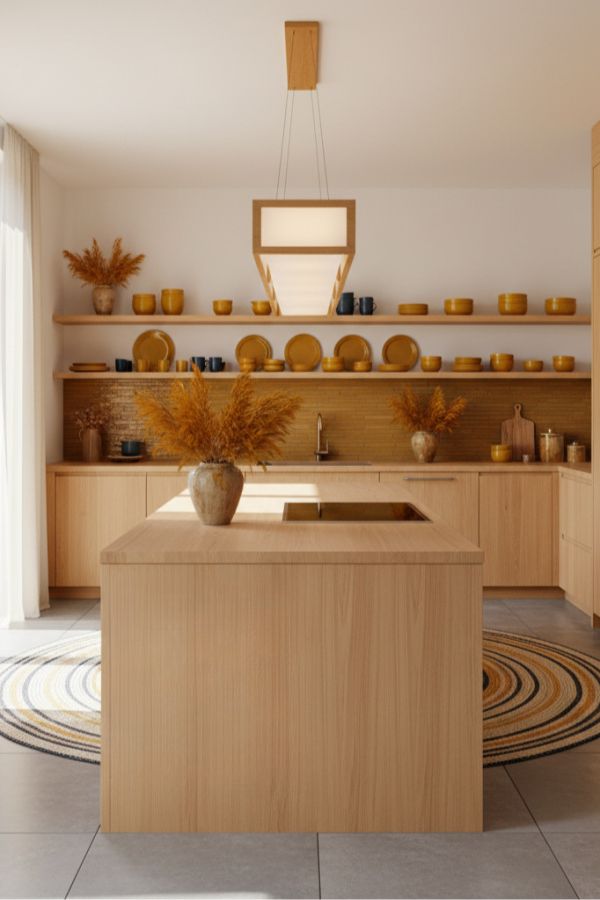
A kitchen island in a light maple wood brings a wonderful natural warmth to a streamlined kitchen. The pale, subtle grain is perfect for a minimalist aesthetic.
What I love most is the use of integrated appliances. Flush-mounted cooktops and concealed power outlets are key to maintaining the island’s sleek profile.
This turns the island into a multifunctional hub. It’s a seamless blend of food prep, casual dining, and social interaction.
This design is the definition of streamlined.
Clever storage within the island is essential for functionality. Pull-out drawers and dedicated spaces for small appliances keep everything organized.
It’s a beautifully efficient design.
Lighting plays a crucial role here. My design journey has taught me that simple pendant lights can enhance the island’s vibrancy without adding any clutter.